The Thesis
Most tools fail the same way: they ask people to leave what they already know and go learn something new. The cognitive load alone buries the return on investment before the first deployment lands. The RR‑TT Protocol was built on the opposite instinct — meet people in the register they already speak, deliver the record just in time, and let the system carry the overhead.
The working research extends this into a formal model. Register-matched AI interaction reduces verification friction and increases output trust — not because the model improved, but because the human stopped fighting the interface. That gap between what a model can produce and what an operator can actually use is not a model problem. It is a handoff problem. That is the problem this company solves.
Thompson, J.M. (in preparation). Register-matched interaction and verification discipline in AI-augmented field operations. Graduate research. — USPTO Provisional #64/101,544, filed June 2026.
Foundational work
Halliday, M.A.K. & Hasan, R. (1989). Language, context, and text. Oxford University Press.
Klein, G. (1999). Sources of power: How people make decisions. MIT Press.
Sweller, J. (1988). Cognitive load during problem solving. Cognitive Science, 12(2), 257–285.
Talking to a system the way a fluent person code-switches: persona, shorthand, culturally-loaded cues that carry meaning faster than flat, literal instructions. High-bandwidth, because the listener already has the library installed.
Research basis
Bernstein (1971) distinguished restricted codes — compressed, context-dependent — from elaborated ones. Expert operators already hold the background theory; elaboration is redundant overhead. Sweller's cognitive load framework confirms it: when extraneous load drops, working memory routes to the actual problem. Register fluency is the mechanism that makes that happen.
The practiced habit of never taking confident output at face value. Not skepticism as a mood — verification as an action, checked against ground truth a human already holds. Teachable, separately. Most people are handed neither.
Research basis
Flavell (1979) identified metacognitive monitoring as a distinct, teachable cognitive skill — separate from domain knowledge. Calibration research consistently shows confident output and accurate output are independent variables. Verification discipline is the trained habit of checking AI-generated claims against ground truth the operator already holds before that output enters any downstream decision.
The Receipts
Spartan Software, Inc.
CEO. Compression + cryptography architecture. Networld‑InterOp, Atlanta. The receipts go back.
Microsoft STE
Software Test Engineer on the internal dogfood team for hosted Exchange. Kept deployments moving. Saw how it works when it works.
Taiwan + Ed Psych
Ten years instructional design and teacher training. Graduate work in educational psychology: neuroplasticity, cognitive load, JIT learning.
USPTO #64/101,544
Provisional patent filed June 29. RR‑TT Protocol. Just‑in‑Time Service Intelligence. The method is documented.
THE PROOF
State-Deterministic Engine
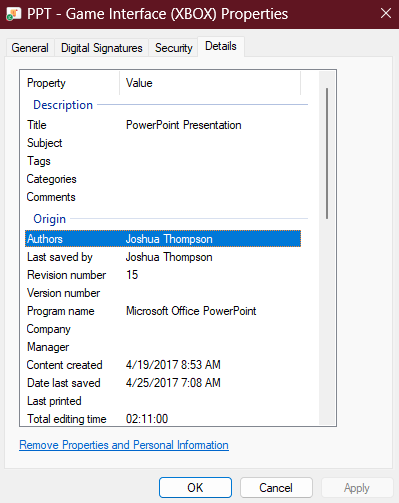
The 2017 artifact is a "tools do not define the engineer" demonstration. Using a constrained, awkward medium, I built an operationally complete state-machine interface: explicit states, guarded transitions, rollback, randomized routing, synchronized feedback, and embedded documentation. This artifact showed applied execution with the tools at hand.
See also — Wildenhain (2017) · PowerPoint™ as a Turing-complete environment
Selected notes · verbatim
PowerPoint was already in the room. Building the interface there — not reaching for a framework, not opening an IDE — is Register Fluency in action. The tool spoke the register. The interface followed. That is what it means to meet a system in the language it already knows.
In the file
VBA event handlers wired to shape triggers. Randomization engine seeded at runtime. Full interaction loop — input, processing, output, confirmation — inside a .pptx. Zero external dependencies.
The A/V confirmation — sound on selection, flash on state change — is verification made sensory. Idempotency was enforced at the character select layer specifically: push it twice, the state holds. The demo does not describe the discipline. It runs it.
In the file
Idempotency guards enforced in macro logic. Dual-modality confirmation: visual flash + audio trigger on every selection event. Designed for crowded rooms. Built 2017. Metatags intact.
Flagship Product
The group chat your team is already in becomes the operations system. One message lands, the ticket is written, the audit trail is live. The work never stops because the tool never got in the way.
The current interface is the CLI — text commands in the rooms your crews already use. Three platforms live: GroupMe, Slack, LINE. Discord ships this weekend. The GUI is in development as Deep Links: invisible UI, zero install, zero workflow change. Command grammar, FSM state machine, typo tolerance, and KB layer are production-tested across HVAC, mechanical, and facilities verticals. Ticket lifecycle, audit trail, and duration logging are confirmed in the logs. Backend tooling is active in the repo now.
speedstack.app →The Founder
"The question is already inside the learner. The teacher who built the thing is the only one who knows which question surfaces it."
Joshua M. Thompson. Twenty years across enterprise infrastructure, classroom design, field operations, and AI systems. Different countries, different eras, different registers — always the same gap: what a system produces, and what an operator can actually use. The dissertation names it. The patent formalizes it. The bots running right now in production are the demonstration. Long enough on both sides of that gap to know the difference.